
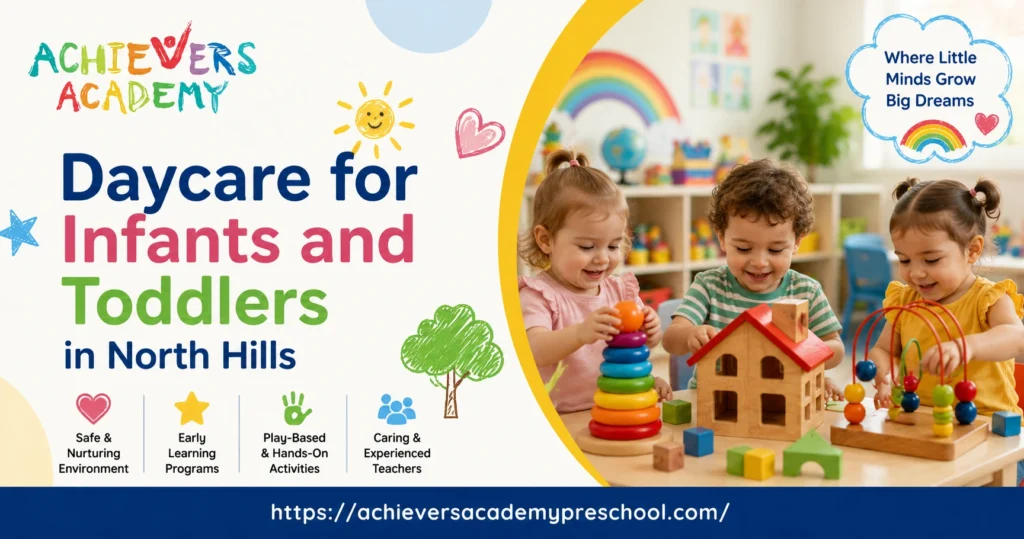
Choosing the right Daycare for infants and toddlers in North Hills is one of the most meaningful decisions parents make.
The early years shape a child’s emotional development, social confidence, communication ability, and readiness for school.
Parents want more than supervision.
They need trusted childcare that provides safety, learning, nurturing attention, and a positive environment where children thrive.
Professional Toddler care services in North Hills and reliable Infant care in North Hills deliver structured support that helps children grow with confidence while giving parents peace of mind.
A quality daycare center creates the strong developmental foundation every child deserves.
Why Daycare for Infants and Toddlers in North Hills Matters
During these years, the brain forms essential connections for:
- Language development
- Social behavior
- Emotional regulation
- Problem-solving
- Motor coordination
Children exposed to structured learning environments during infancy and toddlerhood often transition more smoothly into preschool and kindergarten.
The right daycare helps children feel secure enough to explore and learn naturally.
Benefits of Infant Care in North Hills
Professional Infant care in North Hills provides personalized support tailored to each child’s needs.
Key Features of Quality Infant Care
| Care Element | Developmental Benefit |
| Responsive feeding | Healthy growth |
| Safe sleep routines | Brain development |
| Gentle interaction | Emotional security |
| Sensory stimulation | Cognitive growth |
| Consistent supervision | Safety and trust |
Infants thrive when caregivers provide warmth and consistency.
This trust supports emotional stability and curiosity.
Toddler Care Services in North Hills Build Essential Skills
As toddlers become more independent, learning opportunities become even more important.
Trusted Toddler care services in North Hills encourage growth through play-based learning.
Learning Activities Include:
- Storytime sessions
- Music and rhythm play
- Sensory exploration
- Art and creativity
- Outdoor movement activities
- Group participation exercises
These activities strengthen:
- Language skills
- Memory retention
- Coordination
- Social confidence
- Critical thinking
Learning feels natural when children are engaged through play.
What Makes a Great Daycare Center?
Parents should carefully evaluate childcare options.
1. Safety Standards
Look for:
- Secure entry systems
- Childproof classrooms
- Emergency procedures
- Sanitized learning materials
Safety creates trust for both children and parents.
2. Experienced Caregivers
Qualified teachers should have training in:
- Early childhood education
- Infant CPR
- Child behavior management
- Development milestone assessment
Professional guidance supports stronger outcomes.
3. Low Teacher-to-Child Ratios
Smaller groups ensure:
- Personalized attention
- Better supervision
- Stronger caregiver-child bonding
This is especially valuable for infants.
How Play-Based Learning Supports Development
Children learn best through exploration.
Play-based learning strengthens:
Cognitive Development
Activities improve:
- Focus
- Memory
- Decision-making
Social Development
Children practice:
- Sharing
- Communication
- Cooperation
Physical Coordination
Movement activities support:
- Balance
- Fine motor skills
- Gross motor development
Play creates meaningful learning experiences.
The Importance of Daily Routine
Consistency helps children feel secure.
A structured schedule includes:
- Morning welcome time
- Learning activities
- Snack and meals
- Outdoor play
- Rest periods
- Social interaction
Routine improves:
- Emotional stability
- Sleep quality
- Positive behavior
- Learning readiness
Children thrive when expectations feel predictable.
Common Parent Concerns About Daycare
Parents often ask:
Will My Child Feel Comfortable?
Quality caregivers ease transitions gently and build trust quickly.
Is the Environment Safe?
Professional daycare centers follow strict safety protocols and supervision standards.
Will My Child Learn?
Educational daycare includes structured learning—not just childcare.
Children build foundational academic and social skills daily.
Practical Parent Tips for Choosing the Right Daycare
Visit centers in person.
Observe:
- Child engagement
- Staff friendliness
- Classroom cleanliness
- Learning materials
Ask about:
- Daily schedules
- Staff qualifications
- Communication practices
- Safety policies
The best centers welcome questions openly.
Common Mistakes Parents Make
Avoid:
- Choosing based only on cost
- Skipping classroom tours
- Ignoring parent reviews
- Overlooking curriculum quality
Research prevents poor decisions.
Signs Your Child Is Thriving in Daycare
Healthy adjustment signs include:
- Excitement during drop-off
- Better communication
- Positive social interaction
- Increased independence
- Healthy sleep patterns
These reflect emotional comfort and developmental progress.
Frequently Asked Questions
1. What age groups are accepted in daycare?
Most centers accept infants as young as six weeks through toddler years.
2. What do toddlers learn in daycare?
Language, social interaction, motor skills, and early problem-solving through guided play.
3. How do I know if daycare is safe?
Check staff credentials, cleanliness, supervision ratios, and emergency policies.
4. Why is infant care important?
It supports emotional security, healthy routines, and early brain development.
5. How often should parents receive updates?
Quality centers provide daily communication about activities, meals, naps, and progress.
Recommended Tools for Parents
Helpful resources:
- Brightwheel App
- Parent review websites
- Development milestone trackers
- Enrollment checklists
- Daily communication logs
These tools simplify childcare management.
Long-Term Benefits of Early Childcare
Children enrolled in quality daycare often develop:
- Better emotional regulation
- Improved social skills
- Stronger communication
- Higher academic readiness
- Increased independence